
Lenormand Cards


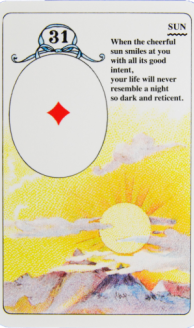


Lenormand Card Deck
The Lenormand card deck is a compact, practical system of 36 symbol cards used for precise, down-to-earth divination. It is often called “Lenormand” after the famed French cartomancer Marie Anne Lenormand, whose reputation helped popularize the style. Historically, however, the 36-card “Petit Lenormand” grew out of late 18th–19th century playing-card traditions (not the 78-card Tarot), and it is read in combinations rather than as standalone archetypes. There are no suits, no Major/Minor Arcana, and traditionally no reversals. Each symbol speaks plainly - Sun is success, Star is guidance and clarity, while Tower refers to institutions, hierarchy, and sometimes solitude - then the surrounding cards refine the message into a sentence.
Unlike Tarot, Lenormand excels at concrete, situational answers: who, what, when, where. Meanings are largely standardized across decks, so while artwork varies, the core symbolism stays consistent. You read by stringing cards together (for example, Letter + Ring = a contract; Heart + Snake = a complicated love situation) to form clear interpretations.
Upright meaning
Because Lenormand does not use reversals, the “upright” essence of the deck is its direct, literal, and combinatorial style. Expect clear signals, quick diagnostics, and practical guidance.
- Core qualities: concrete, specific, time-sensitive, descriptive.
- How messages form: cards combine like words - left modifies right (e.g., House + Ring = a family commitment; Ring + House = a commitment about a property/home).
- Polarity: cards have positive, negative, or neutral tones (e.g., Sun positive, Cross burdensome, Tree neutral/health-oriented) that shape the overall read.
- Focus: people, events, and outcomes - less psychological exploration than Tarot, more “what’s happening and when.”
Reversed meaning
Traditional Lenormand has no reversed cards. If a card comes out upside-down, most readers rotate it upright and interpret normally. “Shadow” or challenging nuances come from:
- Inherently difficult symbols: Cross (burden), Scythe (cuts, accidents, surgery), Mice (loss, stress), Snake (complication, deceit), Coffin (ending, depletion), Clouds (confusion).
- Combinations: Heart + Snake = love triangle/complication; Sun + Clouds = success overshadowed; Tower + Cross = heavy isolation or oppressive institution; Fox + Ring = a contract with strings attached.
- Positions/techniques: near/far rules in the Grand Tableau, Houses, mirroring, and knighting can mark obstacles or delays without needing reversals.
Love & relationships
Lenormand is exceptionally good for status checks, intentions, and timing in love. Use Heart or Ring as topic cards (or Man/Woman significators) to anchor the narrative.
- New/returning love: Heart + Rider = a message or invitation from a lover; Stork + Heart = a change or improvement in the love life; Child + Ring = a fresh start to commitment.
- Commitment: Heart + Ring = commitment/relationship formalizing; Ring + Key = a firm “yes” to commitment or engagement; Garden + Ring = public commitment or social recognition.
- Complications: Snake or Fox with Heart/Ring = deceit or self-interest in love/agreements; Whip + Heart = recurring arguments; Crossroads + Ring = choice about commitment.
- Distance/solitude: Ship + Heart = long-distance love; Tower can show needed boundaries or solitude; Clouds brings uncertainty until cleared by positive follow-ups like Sun or Key.
- Timing notes: Clover = soon/briefly; Scythe = suddenly; Anchor = long-term; Stork = within a period of change or move.
Career & money
For work, look to Anchor (job), Fox (employment/self-interest), Tower (institutions/hierarchy), Bear (finances/boss), Fish (money/commerce).
- Offers & contracts: Letter + Ring = contract; Key + Letter = successful offer; Book + Letter = training/certification paperwork.
- Workplace dynamics: Fox + Anchor = watch for office politics or self-serving behavior on the job; Bear + Fish = strong finances or a manager controlling funds; Tower + Moon = recognition in a formal setting.
- Change/risk: Crossroads + Ship = choosing a new market or travel for work; Scythe + Anchor = layoffs or abrupt job cut; Key + Sun = breakthrough/success.
- Loss/slowdown: Mice + Fish = money draining; Coffin + Fish = halted cash flow; Clouds + Tower = unclear policies from higher-ups.
Health & wellbeing
Lenormand isn’t medical advice, but it can show energetic tendencies around health. Focus on Tree (health/longevity) and watch flanking cards.
- Vitality/recovery: Sun + Tree = strong recovery/vitality; Bouquet + Tree = improvement/relief; Key + Tree = a helpful treatment or clear diagnosis.
- Stress/strain: Mice + Tree = depletion; Whip + Tree = inflammation/pain; Clouds + Tree = unclear symptoms.
- Procedures/endings: Scythe + Tree = surgery or sharp intervention; Coffin + Tree = convalescence, low energy, or an illness ending.
- Lifestyle & mood: Garden + Lily = peace and social balance; Birds + Tree = nerves/anxiety impacting wellbeing; Stork + Tree = implementing health changes.
Practical advice when this deck appears
- Ask concrete questions: who/what/when/where. Lenormand thrives on specificity.
- Choose the right spread: Line of 3 for quick answers; 5 or 7 for cause/effect; 9-card for context; Grand Tableau for multi-topic life overviews.
- Use significators: Man/Woman for people; Heart or Ring for love; Anchor for work; Fish for finances; Tree for health.
- Read left to right: the left card modifies the right. Keep combinations tight (2–5 cards) and literal.
- Mind polarity and proximity: a single negative card can color a cluster; in larger spreads, “near/far” and House placements add nuance without reversals.
- Stay consistent: stick to traditional meanings; note repeaters across lines (echoed symbols amplify emphasis).
What makes Lenormand especially useful in love readings is that it tends to speak about the relationship as it actually functions, not just how it feels in the moment. It can point to the structure around a connection: whether two people are moving toward commitment, dealing with mixed signals, keeping things private, or facing interference from distance, family, or practical concerns. For singles, it is often used to show the type of person likely to appear, the pace of a romance, or what kind of energy needs to change before a relationship can take root.
In work and money questions, the deck is valued for being blunt without being dramatic. It is good for reading job searches, contracts, teamwork, delays, steady income, and the day-to-day realities of a situation. Instead of giving vague inspiration, it often reveals timing, the influence of another person, or whether a plan is supported by solid ground. Many readers like Lenormand when they want a practical snapshot before making a decision, especially if they need to know what is workable rather than what is ideal.
How the reversed reading works
Because traditional Lenormand is not built around reversals, a reversed card is usually not treated as a separate meaning the way it might be in Tarot. Most readers simply turn it upright and let the surrounding cards do the heavy lifting. When a deck or spread does use reversals, the shift is usually read as delay, blockage, concealment, or an issue that is not fully visible yet. That keeps the reading concrete: the deck still describes events and conditions, but with more caution, friction, or uncertainty in the message.
As an everyday tool, Lenormand suits people who want clear answers and dislike overly poetic language. Its symbolism is straightforward, but the real skill comes from reading the cards in sentence-like combinations and trusting the context. Compared with Tarot, it is less focused on inner growth and more on the facts around a situation, which is why many readers turn to it when they need a practical read they can act on.