
How to Keep Tarot Cards and Take Care of Them? Storage, Protection, and Energy Tips
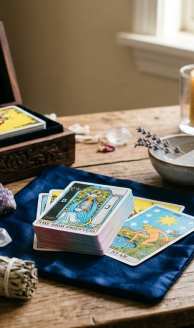
Tarot cards are not just illustrated pieces; they are personal tools of perception, influenced by touch, intention, and environment. Regardless of whether or not an individual uses their physical collection of cards or accesses a tarot card online, the key to clarity is indeed care. Every reader tends to ask themselves, someday, how to keep tarot cards and take care of them at the same time.
It is believed that tarot cards absorb impressions from constant use, emotional conditions, and their storage locations. It requires care to ensure that cards remain not only physically durable but also symbolically potent. Tarot deck care is not superstition; rather, it is a form of tarot deck stewardship. When given appropriate care, tarot cards will always be available, balanced, and dependable.
So here is a down-to-earth and organized response to the question “How to keep tarot cards and take care of them?” Let’s discuss the importance of maintaining the tarot cards, the significance of storage, and forming habits that will ensure the well-being of the deck over a period of time.
Understanding the Importance of Tarot Card Care
Tarot cards serve as interpretive tools. Should one fail to maintain and keep the cards clean, frayed edges may appear, and surfaces may become bent, causing the symbolism to become visually confusing. In addition, disorderly treatment may confuse the reader's line of thought. Effective tarot deck care facilitates the longevity of structure as well as interpretive accuracy.
Why Tarot Deck Care Matters
Neglect extends beyond physical appearance. It can lead to the following consequences:
- Warped or discolored cards that shuffle unevenly.
- Accumulated environmental energy, disrupting interpretive neutrality.
- Reduced lifespan, requiring frequent replacement.
- Weakened intuitive connection between reader and deck.
These faults affect the reading. Structured habits promote tarot deck preservation, which serves to maintain clarity in the symbols and consistency in the feel. A well-cared-for deck moves effortlessly through daily pulls, spreads, or a reflective card of the day practice.
Deck care also fosters a deepened level of familiarity. A well-kept set of cards means the reading goes without visual distraction. This strengthens trust between the reader and the tool, reinforcing confidence during complex readings. Readers of Lenormand (with its quicker shuffles and frequent tableaus) notice this even more: small stock wears faster, so good habits pay off.
Storing, Protecting, and Cleansing Tarot Cards
Many practitioners ask: Is there a specific way to store tarot cards? While there is no rule that applies across the board, some principles do seem to work consistently in favor of durability and energetic balance. Effective tarot card storage and care is a combination of physical protection and environmental awareness.
So, is there a specific way to store tarot cards? Sort of. There is no right container, but there are some sound guidelines that protect against light damage, humidity, dust, and unnecessary exposure.
In thinking about how to keep tarot cards at home, it is best to look at stability. It is better to place them away from direct sunlight, temperature, and wetness. The kitchen and bathroom are not ideal locations, as wetness is a significant issue. Bedrooms, offices, or any reading location will do just fine.
Practical storage options include:
- Sturdy boxes, preferably the original packaging material if available.
- A cloth wrap made of cotton or linen fibers.
- Wooden cases for protection from light and dust.
- Spaces specifically dedicated to storing tarot-related items.
For those wondering again, how to keep tarot cards at home, consistency is key. You should store them in the same safe place after each use. It is not a good idea to leave them scattered across tables, etc., especially overnight. Order is key to intent.
Environmental details that make a difference:
- Keep decks out of direct sun; UV fades ink and dries coatings.
- Aim for moderate conditions: roughly 60–77°F (16–25°C) and 40–60% humidity.
- Use a silica gel packet in a box if your climate is damp (replace every few months).
- Store decks flat in a snug box to prevent bowing; avoid heavy stacks on top.
- Skip rubber bands (they dent edges). If needed, use a soft cotton ribbon.
- For collectible or out-of-print decks, consider acid-free tissue around the deck inside its box.
Handling and Physical Care
- Hands and surface: Read with clean, dry hands. Avoid hand lotion before shuffling. Use a reading cloth or mat to protect card edges from gritty tables.
- Shuffling: Overhand or “Hindu” shuffles are the gentlest. If you riffle/bridge, do so with a soft arc and avoid bending past the card’s natural give - especially with matte or gilded decks.
- Edges and gilding: Gilded or black-edged decks scuff easily; keep them wrapped and avoid riffle shuffles. Rotate your starting point so the same corners don’t wear first.
- Alignment: After a reading, square the deck by tapping it on each side to realign the edges before storing.
- Cleaning dust: Use a soft, dry microfiber cloth or a clean makeup brush along edges. Avoid liquid cleaners - they can lift ink and warp stock.
Creating a Sacred and Protected Tarot Space
Beyond safety issues, there is significant merit in the establishment of a sacred tarot storage space. While the process does not need to be one of ritualistic ceremonies, the space must reflect a degree of reverence.
A small shelf, a covered box placed on a desk, or a drawer covered by fabric can be useful in this regard. The point is to place items intentionally instead of simply storing them. When returning to a deck, pause briefly. The pause is useful to focus and express gratitude.
Nuanced habits shape the basis for tarot card protection methods:
- Wrapping the deck after each reading.
- Setting a quiet intention before storage.
- Avoiding chaotic or emotionally charged spaces.
- Keeping the tools used for tarot work separate from other unrelated clutter.
Examples that work well in practice:
- A lidded wooden box on a bookshelf with a cotton cloth, a notebook, and a pen inside.
- A tray on an altar with a covered pouch; incense kept separate to avoid ash and scent build-up.
- A labeled drawer: one section for active decks, one for archival/collectible decks.
Energetic Care and Simple Reset Methods
Periodic energetic cleansing of the tarot cards can potentially assist in clarity as well. This might mean reshuffling the deck, leaving the deck unused for a short period of time, or leaving the deck in a calm environment. Cleansing does not require dramatic action. Simplicity maintains balance.
- Shuffle reset: Overhand shuffle while repeating a neutral phrase (e.g., “Clear and neutral”) 3–9 times, then cut once.
- Breath or “knock”: Hold the squared deck, exhale gently over it or tap once with knuckles to symbolically clear lingering charge.
- Order-and-cut: Put the deck back in sequence (Majors 0–21, then each suit Ace–King), then cut and shuffle to reopen flow. Great after intense reads.
- Sound: A bell or chime rung over the deck works without residue or smoke.
- Light: Moonlight on a windowsill is gentle; avoid direct sun (fading). Indirect daylight is fine.
- Salt proximity: Place a small bowl of salt near the deck overnight, not in contact - salt can attract moisture.
- Crystal companions: If you use them, keep a piece of clear quartz or selenite beside (not on) the deck in storage.
Travel and Public Readings
- Case: Use a hard deck box or padded pouch inside your bag. Add a small desiccant if traveling to humid areas.
- Surface: Bring a foldable reading cloth; many public tables are rough or sticky.
- Touch policies: Decide whether querents may shuffle or cut. If not, invite them to choose from fans you present.
- Sanitizers: Let sanitizer fully dry before touching cards; lingering alcohol can dull finishes.
- Backup: Keep a “workhorse” deck for on-the-go readings and reserve delicate or out-of-print decks for home.
Multi-Deck Management and Lending
- Rotation: If you own several decks, rotate usage to reduce wear on a single favorite.
- Labeling: Store each deck with its title card or a note; it saves time and keeps systems separate (Tarot vs. Lenormand vs. oracles).
- Lending: If you lend a deck, send it in a box and cloth. When it returns, do a quick reset (shuffle + breath, or order-and-cut) before the next reading.
- After heavy sessions: “Quarantine” the deck - leave it wrapped and resting for a day before reuse.
Special Notes for Lenormand Readers
- Frequent shuffling: Grand Tableaus mean many quick shuffles; prefer overhand to protect smaller stock.
- Uniform backs: If you read reversals in tarot but not in Lenormand, store Lenormand decks squared and facing the same way to avoid incidental tells.
- Portability: A slim, hard case prevents edge dings when carrying multiple Lenormand decks for classes or practice.
Simple Routines You Can Keep
- After every reading (2 minutes): Square the deck, overhand shuffle 3–7 times with a clearing phrase, wrap, and return to its spot.
- Weekly (5 minutes): Dust box/pouch, check for moisture, swap or refresh the silica gel if needed, tidy the reading space.
- Monthly or after intense work: Do an order-and-cut reset or a sound cleanse; review notes about how the deck is “reading” and adjust habits if needed.
- New deck welcome: Leaf through every card, shuffle gently to break stiffness, pull a “how to work together” card, then store it where you’ll reach for it often.
Troubleshooting and Quick Fixes
- Slight warp: Store the deck squared under a light, even weight (two books) for a few days, wrapped in a cotton cloth.
- Sticky cards: Fan the deck and let it air out overnight; gently dust edges with a soft brush. Avoid powders - they can stain coatings.
- Odors (must or smoke): Place the boxed deck in a larger lidded container with an open sachet of baking soda or activated charcoal nearby for 24–48 hours.
- Spills: Blot immediately with absorbent paper - no rubbing. Air dry fanned out at room temperature; avoid hairdryers or heaters.
- Edge chipping on gilded decks: Switch to gentler shuffles and keep hands oil-free; accept patina as natural aging.
Conclusion: Respecting Your Tarot Deck Over Time
Taking care of your tarot deck can be achieved by striking a balance between being practical and intentional. It is best to develop rituals that can be easily achieved over time, and with careful maintenance and upkeep of a tarot deck, the tarot remains clear, sturdy, and aligned for focused and purpose-filled readings.
FAQ: Common Questions About Tarot Deck Care
- Do I need to wrap my deck in silk? No. Silk is traditional and lovely, but any clean natural fiber (cotton, linen, wool) works well.
- Can other people touch my cards? It’s your call. If they do, a quick shuffle reset or breath/knock clears your deck afterward.
- How often should I “cleanse” a deck? When readings feel muddy, after emotionally heavy sessions, or on a monthly cadence. Otherwise, normal shuffling and respectful storage are enough.
- Is moonlight or sunlight better? Moonlight is gentle. Avoid direct sun - it fades ink and can warp cards.
- Should I use card sleeves? Sleeves protect but change the feel and size; most tarot readers skip them. For rare decks, perfect-fit sleeves can help in storage, not daily reading.
